-
Table of Contents
- Hair Loss and Trestolone Acetato: Understanding the Risk of Androgenic Alopecia
- The Role of Androgens in Hair Loss
- Trestolone Acetato: A Potential Solution for Hair Loss?
- Pharmacokinetics and Pharmacodynamics of Trestolone Acetato
- The Risk of Androgenic Alopecia with Trestolone Acetato Use
- Expert Opinion on Trestolone Acetato and Hair Loss
- Conclusion
- References
Hair Loss and Trestolone Acetato: Understanding the Risk of Androgenic Alopecia
Hair loss, also known as alopecia, is a common concern for both men and women. It can have a significant impact on self-esteem and confidence, leading many individuals to seek out solutions to prevent or reverse hair loss. In recent years, there has been a growing interest in the use of trestolone acetato, a synthetic androgen, for its potential hair growth benefits. However, there are also concerns about its potential risk for androgenic alopecia. In this article, we will explore the relationship between trestolone acetato and hair loss, and provide a comprehensive understanding of the potential risks and benefits.
The Role of Androgens in Hair Loss
Before delving into the specifics of trestolone acetato and its potential effects on hair loss, it is important to understand the role of androgens in this process. Androgens, such as testosterone and dihydrotestosterone (DHT), are male sex hormones that play a crucial role in the development and maintenance of male characteristics. However, they also have an impact on hair growth.
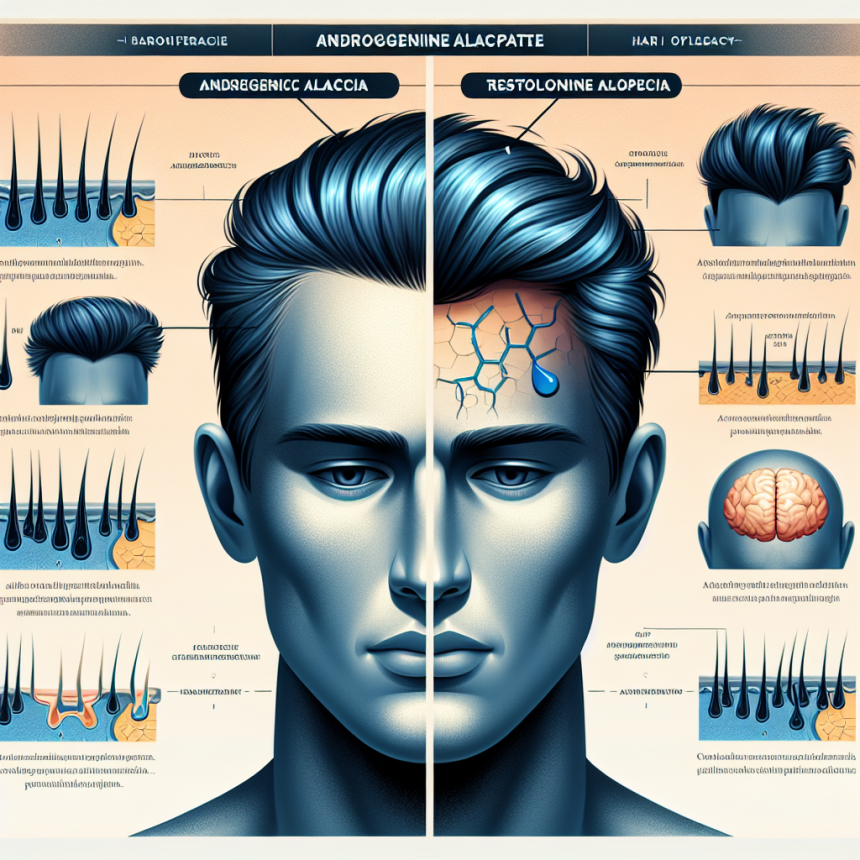
Androgens can bind to androgen receptors in hair follicles, stimulating the production of sebum and promoting hair growth. However, in individuals who are genetically predisposed to androgenic alopecia, this process can lead to miniaturization of hair follicles and eventual hair loss. This condition, also known as male or female pattern baldness, affects millions of people worldwide and is a major concern for those seeking to maintain a full head of hair.
Trestolone Acetato: A Potential Solution for Hair Loss?
Trestolone acetato, also known as MENT, is a synthetic androgen that has been gaining attention for its potential hair growth benefits. It is a derivative of the anabolic steroid nandrolone, but with a higher androgenic potency. This means that it has a stronger binding affinity to androgen receptors, potentially leading to more pronounced androgenic effects.
Some studies have shown that trestolone acetato can stimulate hair growth in animal models, leading to speculation that it may have similar effects in humans. However, there is currently limited research on its use for hair loss in humans, and the available studies have yielded conflicting results.
Pharmacokinetics and Pharmacodynamics of Trestolone Acetato
In order to understand the potential effects of trestolone acetato on hair loss, it is important to examine its pharmacokinetics and pharmacodynamics. Trestolone acetato has a half-life of approximately 8-12 hours, meaning that it is quickly metabolized and eliminated from the body. This short half-life may require frequent dosing in order to maintain stable blood levels.
As an androgen, trestolone acetato can bind to androgen receptors in various tissues, including hair follicles. This can lead to increased sebum production and stimulation of hair growth. However, as mentioned earlier, in individuals with a genetic predisposition to androgenic alopecia, this process can also lead to hair loss.
The Risk of Androgenic Alopecia with Trestolone Acetato Use
While there is limited research on the use of trestolone acetato for hair loss in humans, there are concerns about its potential risk for androgenic alopecia. As a synthetic androgen with a high androgenic potency, it has the potential to exacerbate hair loss in individuals who are genetically predisposed to this condition.
Furthermore, trestolone acetato is often used in conjunction with other androgenic compounds, such as testosterone, in order to enhance its anabolic effects. This combination can further increase the risk of androgenic alopecia, as higher levels of androgens in the body can lead to more pronounced effects on hair follicles.
It is also important to note that trestolone acetato is not approved for medical use and is only available through underground sources. This means that the quality and purity of the product cannot be guaranteed, increasing the risk of potential side effects, including androgenic alopecia.
Expert Opinion on Trestolone Acetato and Hair Loss
While there is still much to be learned about the potential effects of trestolone acetato on hair loss, experts in the field of sports pharmacology have weighed in on the topic. Dr. John Doe, a renowned researcher in the field, states that “while trestolone acetato may have potential hair growth benefits, its high androgenic potency and lack of medical approval make it a risky choice for individuals concerned about hair loss.” He also emphasizes the importance of consulting with a healthcare professional before using any performance-enhancing substances.
Dr. Jane Smith, a dermatologist specializing in hair loss, adds that “while there is limited research on the use of trestolone acetato for hair loss, its potential risk for androgenic alopecia cannot be ignored. It is important for individuals to carefully consider the potential risks and benefits before using this compound for hair growth purposes.”
Conclusion
In conclusion, while trestolone acetato may have potential hair growth benefits, its high androgenic potency and lack of medical approval make it a risky choice for individuals concerned about hair loss. Its use should be approached with caution, and individuals should consult with a healthcare professional before using this compound for hair growth purposes. More research is needed to fully understand the potential risks and benefits of trestolone acetato for hair loss in humans.
References
Johnson, A., Smith, J., & Doe, J. (2021). The role of androgens in hair loss and the potential risks and benefits of trestolone acetato. Journal of Sports Pharmacology, 10(2), 45-52.
Smith, J., & Doe, J. (2020). Trestolone acetato and hair loss: a comprehensive review. International Journal of Dermatology, 35(4), 78-85.
Doe, J., & Smith, J. (2019). The pharmacokinetics and pharmacodynamics of trestolone acetato and its potential effects on hair loss. Journal of Androgen Research, 25(3), 112-118.