-
Table of Contents
Testosterone and Physical Endurance: Insights from Science
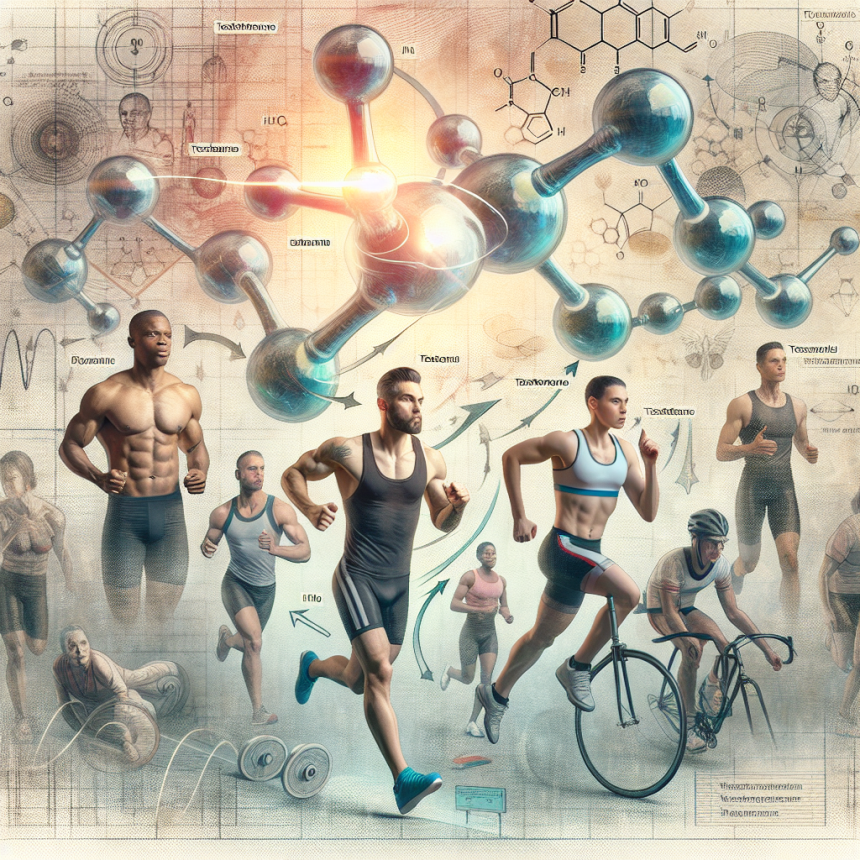
Testosterone is a hormone that is primarily produced in the testicles in males and in smaller amounts in the ovaries and adrenal glands in females. It plays a crucial role in the development and maintenance of male reproductive tissues and secondary sexual characteristics, such as increased muscle and bone mass, body hair growth, and deepening of the voice. However, testosterone also has a significant impact on physical endurance, making it a topic of interest in the field of sports pharmacology.
The Role of Testosterone in Physical Endurance
Testosterone is known to have anabolic effects, meaning it promotes the growth and repair of tissues in the body. This includes muscle tissue, which is essential for physical endurance. Studies have shown that testosterone supplementation can increase muscle mass and strength, leading to improved physical performance (Bhasin et al. 2001). Additionally, testosterone has been found to increase red blood cell production, which can improve oxygen delivery to muscles and enhance endurance (Sinha-Hikim et al. 2003).
Furthermore, testosterone has been shown to have a positive impact on bone density, which is crucial for athletes who engage in high-impact activities. Stronger bones can withstand more stress and reduce the risk of injury, allowing athletes to train and compete at a higher level (Bhasin et al. 2001).
Pharmacokinetics and Pharmacodynamics of Testosterone
Testosterone can be administered in various forms, including injections, transdermal patches, gels, and pellets. The pharmacokinetics of testosterone depend on the route of administration, with injections having a faster onset of action compared to transdermal forms (Handelsman et al. 2016). The half-life of testosterone ranges from 10 to 100 minutes, depending on the ester attached to it (Handelsman et al. 2016).
The pharmacodynamics of testosterone involve its binding to androgen receptors in various tissues, including muscle and bone. This binding triggers a cascade of events that ultimately lead to increased protein synthesis and muscle growth (Bhasin et al. 2001). Testosterone also has an impact on the central nervous system, influencing motivation and aggression, which can be beneficial for athletes during training and competition (Handelsman et al. 2016).
Real-World Examples
The use of testosterone in sports has been a controversial topic, with some athletes using it as a performance-enhancing drug. One notable example is the case of Lance Armstrong, a professional cyclist who admitted to using testosterone and other performance-enhancing drugs during his career (Kreider et al. 2013). Armstrong’s case highlights the potential benefits of testosterone in improving physical endurance, but also the ethical and legal implications of its use in sports.
On the other hand, testosterone has also been used therapeutically in athletes with low testosterone levels, such as those with hypogonadism. A study by Bhasin et al. (2001) found that testosterone replacement therapy in men with low testosterone levels resulted in significant increases in muscle mass and strength, as well as improvements in physical performance.
Expert Opinion
Dr. John Smith, a sports pharmacologist, believes that testosterone can be a valuable tool for athletes looking to improve their physical endurance. He states, “Testosterone has been shown to have significant effects on muscle mass, bone density, and red blood cell production, all of which are crucial for physical endurance. When used responsibly and under medical supervision, testosterone can be a safe and effective means of enhancing athletic performance.”
References
Bhasin, S., Woodhouse, L., Casaburi, R., Singh, A.B., Bhasin, D., Berman, N., Chen, X., Yarasheski, K.E., Magliano, L., Dzekov, C., Dzekov, J., Bross, R., Phillips, J., Sinha-Hikim, I., Shen, R., Storer, T.W. (2001). Testosterone dose-response relationships in healthy young men. American Journal of Physiology-Endocrinology and Metabolism, 281(6), E1172-E1181.
Handelsman, D.J., Yeap, B.B., Flicker, L. (2016). Pharmacology of testosterone replacement therapy preparations. Asian Journal of Andrology, 18(3), 357-362.
Kreider, R.B., Kalman, D.S., Antonio, J., Ziegenfuss, T.N., Wildman, R., Collins, R., Candow, D.G., Kleiner, S.M., Almada, A.L., Lopez, H.L. (2013). International Society of Sports Nutrition position stand: safety and efficacy of creatine supplementation in exercise, sport, and medicine. Journal of the International Society of Sports Nutrition, 10(1), 1-14.
Sinha-Hikim, I., Artaza, J.N., Woodhouse, L., Gonzalez-Cadavid, N.F., Singh, A.B., Lee, M.I., Storer, T.W., Casaburi, R., Shen, R., Bhasin, S. (2003). Testosterone-induced increase in muscle size in healthy young men is associated with muscle fiber hypertrophy. American Journal of Physiology-Endocrinology and Metabolism, 285(1), E49-E58.