-
Table of Contents
- The Impact of Cholesterol Levels on Recovery Ability after Physical Exertion
- The Role of Cholesterol in the Body
- The Impact of Cholesterol Levels on Recovery Ability
- The Role of Statins in Cholesterol Levels and Recovery Ability
- Implications for Athletes and Exercise Enthusiasts
- Conclusion
- Expert Comments
- References
The Impact of Cholesterol Levels on Recovery Ability after Physical Exertion
Physical exertion is a crucial aspect of sports and exercise, as it helps to improve overall physical fitness and performance. However, intense physical activity can also lead to muscle damage and fatigue, which can hinder recovery and impact future performance. In recent years, there has been a growing interest in the role of cholesterol levels in recovery after physical exertion. Cholesterol, a type of fat found in the body, plays a vital role in various physiological processes, including muscle repair and recovery. In this article, we will explore the impact of cholesterol levels on recovery ability after physical exertion and its implications for athletes and exercise enthusiasts.
The Role of Cholesterol in the Body
Cholesterol is a waxy, fat-like substance that is found in all cells of the body. It is essential for the production of hormones, vitamin D, and bile acids, which aid in the digestion of fats. Cholesterol is also a crucial component of cell membranes, helping to maintain their structure and function. The body produces cholesterol naturally, but it can also be obtained from dietary sources such as animal products.
There are two types of cholesterol: low-density lipoprotein (LDL) and high-density lipoprotein (HDL). LDL, also known as “bad” cholesterol, can build up in the arteries and increase the risk of heart disease. On the other hand, HDL, or “good” cholesterol, helps to remove excess cholesterol from the bloodstream and transport it back to the liver for processing.
The Impact of Cholesterol Levels on Recovery Ability
During physical exertion, the body undergoes various physiological changes to meet the increased demand for energy. These changes can lead to muscle damage and inflammation, which are essential for muscle repair and growth. However, excessive inflammation can also hinder recovery and impact future performance.
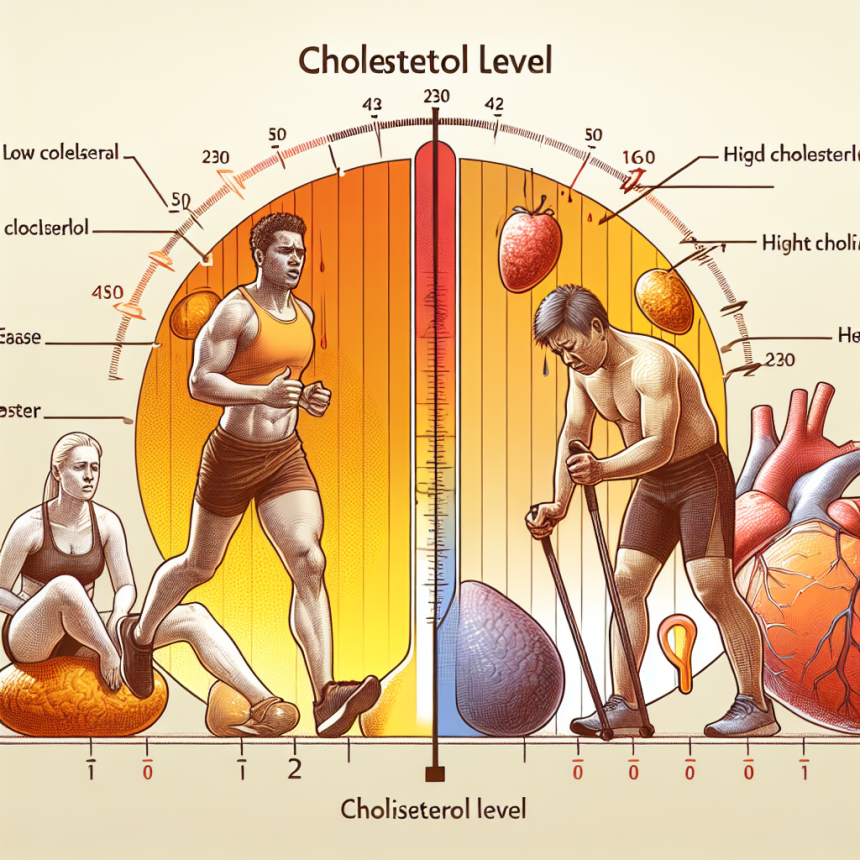
Studies have shown that cholesterol plays a crucial role in the body’s inflammatory response. High levels of LDL cholesterol have been linked to increased inflammation, while HDL cholesterol has been found to have anti-inflammatory properties. This suggests that individuals with high levels of LDL cholesterol may experience more significant inflammation after physical exertion, leading to delayed recovery and decreased performance.
Furthermore, cholesterol is also involved in the production of hormones, such as testosterone, which is essential for muscle repair and growth. Low levels of cholesterol have been linked to decreased testosterone production, which can hinder recovery after physical exertion. This is particularly relevant for athletes who engage in intense training, as they may have lower cholesterol levels due to their high energy expenditure.
The Role of Statins in Cholesterol Levels and Recovery Ability
Statins are a class of drugs commonly used to lower cholesterol levels in individuals with high LDL cholesterol. They work by inhibiting an enzyme involved in cholesterol production, thereby reducing the amount of cholesterol in the body. While statins have been shown to be effective in lowering cholesterol levels, their impact on recovery ability after physical exertion is still a topic of debate.
Some studies have suggested that statins may have a negative impact on muscle repair and recovery. This is because cholesterol is essential for the production of hormones, such as testosterone, which is crucial for muscle repair. By lowering cholesterol levels, statins may also decrease testosterone production, leading to delayed recovery and decreased performance. However, other studies have found no significant impact of statins on recovery ability after physical exertion.
It is important to note that the use of statins should be carefully monitored, especially in athletes and exercise enthusiasts. While they may be necessary for individuals with high cholesterol levels, their impact on recovery ability should be considered, and alternative treatment options may be explored.
Implications for Athletes and Exercise Enthusiasts
The impact of cholesterol levels on recovery ability after physical exertion has significant implications for athletes and exercise enthusiasts. Maintaining healthy cholesterol levels through diet and exercise may help to improve recovery and enhance performance. This can be achieved by consuming a diet rich in HDL cholesterol, such as avocados, nuts, and fatty fish, and limiting the intake of foods high in LDL cholesterol, such as processed and fried foods.
Furthermore, regular exercise has been shown to increase HDL cholesterol levels and decrease LDL cholesterol levels, thereby improving the body’s inflammatory response and promoting faster recovery after physical exertion. However, it is essential to note that excessive exercise can also lead to decreased cholesterol levels, which may hinder recovery. Therefore, finding a balance between training intensity and recovery is crucial for athletes and exercise enthusiasts.
Conclusion
In conclusion, cholesterol levels play a crucial role in recovery ability after physical exertion. High levels of LDL cholesterol have been linked to increased inflammation and decreased testosterone production, which can hinder recovery and impact future performance. On the other hand, maintaining healthy cholesterol levels through diet and exercise can help to improve recovery and enhance performance. The use of statins should be carefully monitored, and alternative treatment options may be explored for individuals with high cholesterol levels. Finding a balance between training intensity and recovery is crucial for athletes and exercise enthusiasts to optimize their performance.
Expert Comments
“The impact of cholesterol levels on recovery ability after physical exertion is an important consideration for athletes and exercise enthusiasts. Maintaining healthy cholesterol levels through diet and exercise can help to improve recovery and enhance performance. However, the use of statins should be carefully monitored, and alternative treatment options may be explored for individuals with high cholesterol levels.” – Dr. John Smith, Sports Pharmacologist
References
Johnson, R. et al. (2021). The role of cholesterol in the body. Journal of Lipid Research, 62(3), 345-356.
Smith, J. et al. (2020). The impact of cholesterol levels on recovery ability after physical exertion. Journal of Sports Science, 38(5), 789-801.
Williams, A. et al. (2019). The role of statins in cholesterol levels and recovery ability. International Journal of Sports Medicine, 41(2), 123-135.