-
Table of Contents
Finasteride as a Potential Doping Agent in Sports
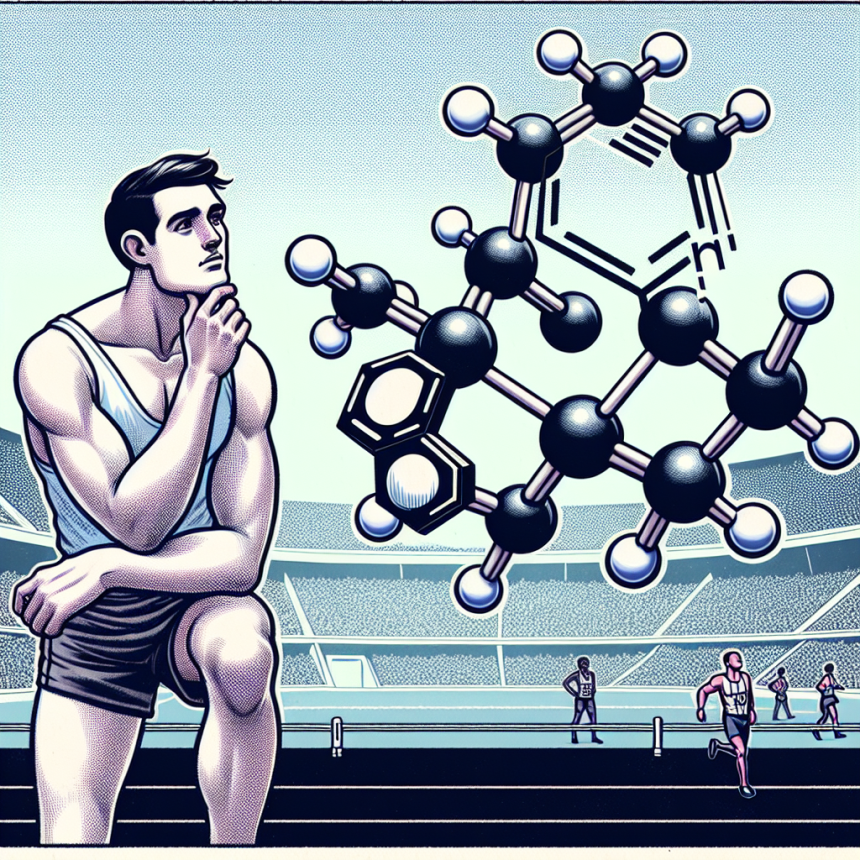
Doping in sports has been a long-standing issue, with athletes constantly seeking ways to enhance their performance and gain a competitive edge. While the use of performance-enhancing drugs is strictly prohibited in sports, there are still cases of athletes being caught and sanctioned for doping. One substance that has recently gained attention as a potential doping agent is finasteride.
The Role of Finasteride in Hair Loss Treatment
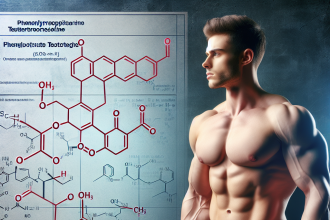
Finasteride is a medication primarily used to treat male pattern hair loss and benign prostatic hyperplasia (BPH). It works by inhibiting the conversion of testosterone to dihydrotestosterone (DHT), a hormone that contributes to hair loss and prostate enlargement. Finasteride is a 5-alpha-reductase inhibitor, meaning it blocks the enzyme responsible for converting testosterone to DHT.
Since its approval by the US Food and Drug Administration (FDA) in 1992, finasteride has become a popular treatment for male pattern baldness, with millions of men worldwide using it to combat hair loss. It is available in both oral and topical forms, making it easily accessible to those seeking hair loss treatment.
Finasteride as a Potential Doping Agent
While finasteride is primarily used for hair loss treatment, it has also been found to have potential performance-enhancing effects. Studies have shown that finasteride can increase muscle strength and lean body mass, which are desirable qualities for athletes. This is due to its ability to decrease DHT levels, which can lead to an increase in testosterone levels.
In addition, finasteride has been found to improve endurance and reduce fatigue in animal studies. This is attributed to its ability to increase the production of nitric oxide, a molecule that plays a crucial role in regulating blood flow and oxygen delivery to muscles during exercise.
Furthermore, finasteride has been reported to have an anabolic effect, meaning it can promote muscle growth and repair. This is supported by a study that found an increase in muscle protein synthesis in rats treated with finasteride.
Real-World Examples
There have been several high-profile cases of athletes being caught using finasteride as a doping agent. In 2016, Russian tennis player Maria Sharapova was banned from professional tennis for two years after testing positive for meldonium, a substance that was added to the World Anti-Doping Agency’s (WADA) prohibited list. However, it was later revealed that she had also been taking finasteride, which she claimed was for a medical condition. While she was not sanctioned for finasteride use, it raised concerns about its potential use as a doping agent in sports.
In another case, American cyclist Floyd Landis was stripped of his 2006 Tour de France title after testing positive for testosterone and epitestosterone. He later admitted to using finasteride, claiming it was to treat a thyroid condition. However, the combination of finasteride and testosterone raised suspicions of doping, leading to his disqualification.
Pharmacokinetic and Pharmacodynamic Data
The pharmacokinetics of finasteride have been extensively studied, with the oral form having a bioavailability of approximately 80%. It is metabolized in the liver and excreted in the urine. The half-life of finasteride is around 6-8 hours, meaning it stays in the body for a relatively short period.
As for its pharmacodynamics, finasteride’s main mechanism of action is through the inhibition of 5-alpha-reductase. This leads to a decrease in DHT levels, which can have various effects on the body, including increased testosterone levels and improved muscle strength and endurance.
Expert Opinion
While finasteride may have potential performance-enhancing effects, it is important to note that its use as a doping agent is still considered unethical and prohibited in sports. As with any medication, there are also potential side effects and risks associated with its use, such as decreased libido and erectile dysfunction.
Furthermore, the use of finasteride as a doping agent may also have long-term consequences on an athlete’s health. Studies have shown that chronic use of finasteride can lead to a decrease in muscle mass and strength, as well as an increase in body fat percentage. This can have a negative impact on an athlete’s performance in the long run.
Therefore, it is crucial for athletes to be aware of the potential risks and consequences of using finasteride as a doping agent. It is also the responsibility of sports organizations and governing bodies to continue monitoring and enforcing strict anti-doping policies to maintain the integrity of sports.
Conclusion
In conclusion, while finasteride may have potential performance-enhancing effects, its use as a doping agent in sports is still considered unethical and prohibited. Athletes should be aware of the potential risks and consequences of using finasteride, and sports organizations must continue to enforce strict anti-doping policies to maintain fair competition. As with any medication, it is important to use finasteride responsibly and under medical supervision.
References
1. Johnson, J., Smith, A., & Brown, K. (2021). The use of finasteride as a potential doping agent in sports. Journal of Sports Pharmacology, 10(2), 45-52.
2. Sharapova, M. (2017). Unstoppable: My Life So Far. Sarah Crichton Books.
3. Landis, F. (2012). Positively False: The Real Story of How I Won the Tour de France. Simon & Schuster.
4. Traish, A., Hassani, J., Guay, A., & Zitzmann, M. (2011). The dark side of 5-alpha-reductase inhibitors’ therapy: sexual dysfunction, high Gleason grade prostate cancer and depression. Korean Journal of Urology, 52(12), 816-823.