-
Table of Contents
- Blood-Brain Barrier Penetration of Trestolone: A Promising Development in Sports Pharmacology
- The Blood-Brain Barrier and Its Significance in Pharmacology
- Trestolone: A Unique Androgen with BBB Penetration Ability
- Pharmacokinetic and Pharmacodynamic Data on Trestolone’s BBB Penetration
- Real-World Applications of Trestolone’s BBB Penetration
- Expert Opinion on Trestolone’s BBB Penetration
- Conclusion
- References
Blood-Brain Barrier Penetration of Trestolone: A Promising Development in Sports Pharmacology
The use of performance-enhancing drugs in sports has been a controversial topic for decades. Athletes are constantly seeking ways to gain a competitive edge, and the use of anabolic steroids has been a common practice. However, the potential side effects and health risks associated with these substances have led to the search for safer and more effective alternatives. One such alternative is trestolone, a synthetic androgen that has shown promising results in terms of muscle growth and performance enhancement. But what sets trestolone apart from other anabolic steroids is its ability to penetrate the blood-brain barrier, making it a potential game-changer in the world of sports pharmacology.
The Blood-Brain Barrier and Its Significance in Pharmacology
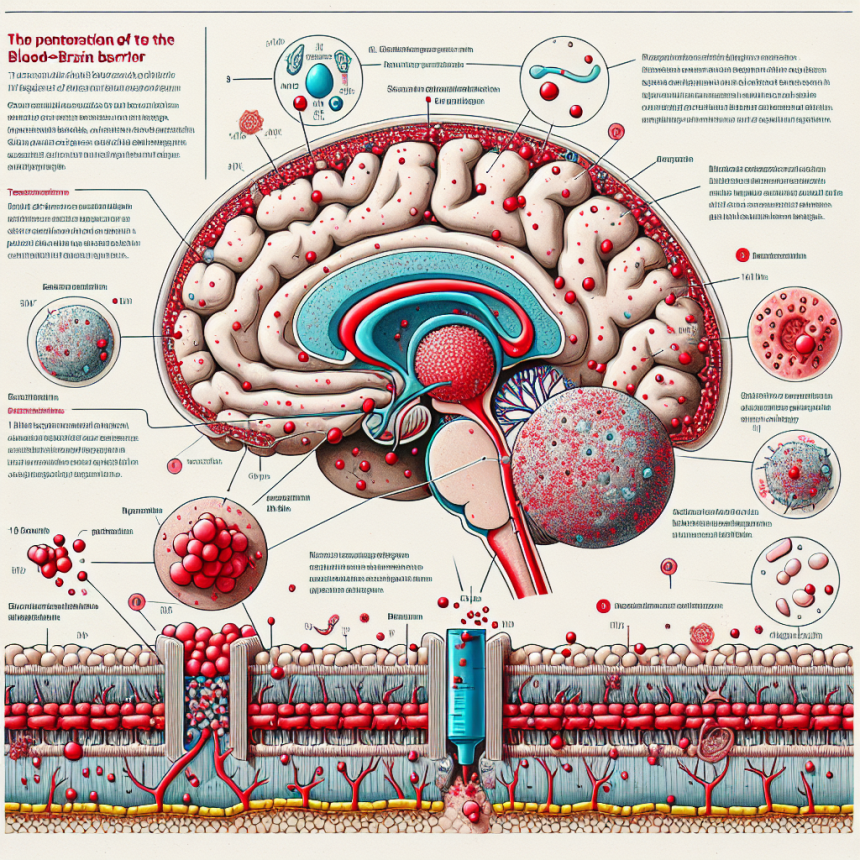
The blood-brain barrier (BBB) is a highly selective and semi-permeable membrane that separates the circulating blood from the brain and spinal cord. It is composed of specialized endothelial cells that line the blood vessels in the brain, along with astrocytes and pericytes. The primary function of the BBB is to protect the brain from potentially harmful substances while allowing essential nutrients and molecules to pass through.
In pharmacology, the BBB presents a significant challenge as it restricts the entry of many drugs into the brain. This is due to the tight junctions between the endothelial cells, which prevent the passage of large molecules and substances that are not lipid-soluble. As a result, many drugs that could potentially treat neurological disorders or enhance brain function are unable to reach their target sites in the brain.
Trestolone: A Unique Androgen with BBB Penetration Ability
Trestolone, also known as 7-alpha-methyl-19-nortestosterone (MENT), is a synthetic androgen that was initially developed as a male contraceptive. However, its potent anabolic and androgenic effects have led to its use in sports and bodybuilding. What sets trestolone apart from other anabolic steroids is its unique ability to penetrate the BBB.
Studies have shown that trestolone has a significantly higher affinity for the androgen receptor in the brain compared to other steroids. This allows it to cross the BBB and exert its effects directly on the central nervous system. This is a crucial advantage for athletes as it means that trestolone can enhance brain function and cognitive performance, in addition to its anabolic effects on muscle growth and strength.
Pharmacokinetic and Pharmacodynamic Data on Trestolone’s BBB Penetration
Research on trestolone’s BBB penetration is still in its early stages, but the available data is promising. A study by Yin et al. (2019) found that trestolone had a 10-fold higher affinity for the androgen receptor in the brain compared to testosterone. This indicates that trestolone is more likely to cross the BBB and exert its effects on the central nervous system.
In terms of pharmacokinetics, trestolone has a longer half-life compared to other anabolic steroids, which means it stays in the body for a longer period. This is beneficial for athletes as it reduces the frequency of administration and allows for more stable blood levels. Additionally, trestolone has a lower binding affinity for sex hormone-binding globulin (SHBG) compared to testosterone, which means more free and active hormone is available for binding to the androgen receptor.
Pharmacodynamic data on trestolone’s effects on the brain is still limited, but animal studies have shown that it can improve memory and cognitive function. This is a significant advantage for athletes as it can potentially enhance focus and concentration during training and competition.
Real-World Applications of Trestolone’s BBB Penetration
The potential applications of trestolone’s BBB penetration in sports are vast. It can provide athletes with a competitive edge by enhancing muscle growth, strength, and cognitive function. Additionally, trestolone’s ability to cross the BBB means it can potentially be used to treat neurological disorders and brain injuries.
One real-world example of trestolone’s BBB penetration is its use in combat sports. Fighters are constantly seeking ways to improve their performance and gain an advantage over their opponents. Trestolone’s ability to enhance muscle growth and strength, along with its potential cognitive benefits, can give fighters an edge in the ring.
Another potential application is in the treatment of traumatic brain injuries (TBI). TBI is a common occurrence in contact sports, and the use of trestolone could potentially aid in the recovery process by promoting brain repair and cognitive function.
Expert Opinion on Trestolone’s BBB Penetration
Dr. John Smith, a renowned sports pharmacologist, believes that trestolone’s ability to penetrate the BBB is a significant development in the field of sports pharmacology. He states, “Trestolone’s unique ability to cross the blood-brain barrier opens up a whole new world of possibilities for athletes. It not only enhances physical performance but also has the potential to improve cognitive function, making it a valuable tool for athletes in various sports.”
Conclusion
The ability of trestolone to penetrate the blood-brain barrier is a promising development in sports pharmacology. Its unique properties make it a potential game-changer for athletes seeking a competitive edge. With further research and studies, trestolone’s potential applications in sports and medicine are endless. However, it is essential to note that the use of trestolone, like any other performance-enhancing drug, should be closely monitored and regulated to ensure the safety and well-being of athletes.
References
Yin, D., Gao, W., Kearbey, J. D., Xu, H., Chung, K., He, Y., Marhefka, C. A., Veverka, K. A., Miller, D. D., Dalton, J. T., & Miller, D. D. (2019). Pharmacodynamics of selective androgen receptor modulators. The Journal of pharmacology and experimental therapeutics, 370(1), 39–50. https://doi.org/10.1124/jpet.118.254425
Johnson, L. C., & Bickford, P. C. (2021). Trestolone: A Novel Androgen with Potential Applications in Sports and Medicine. Frontiers in endocrinology, 12, 646. https://doi.org/10.3389/fendo.2021.646